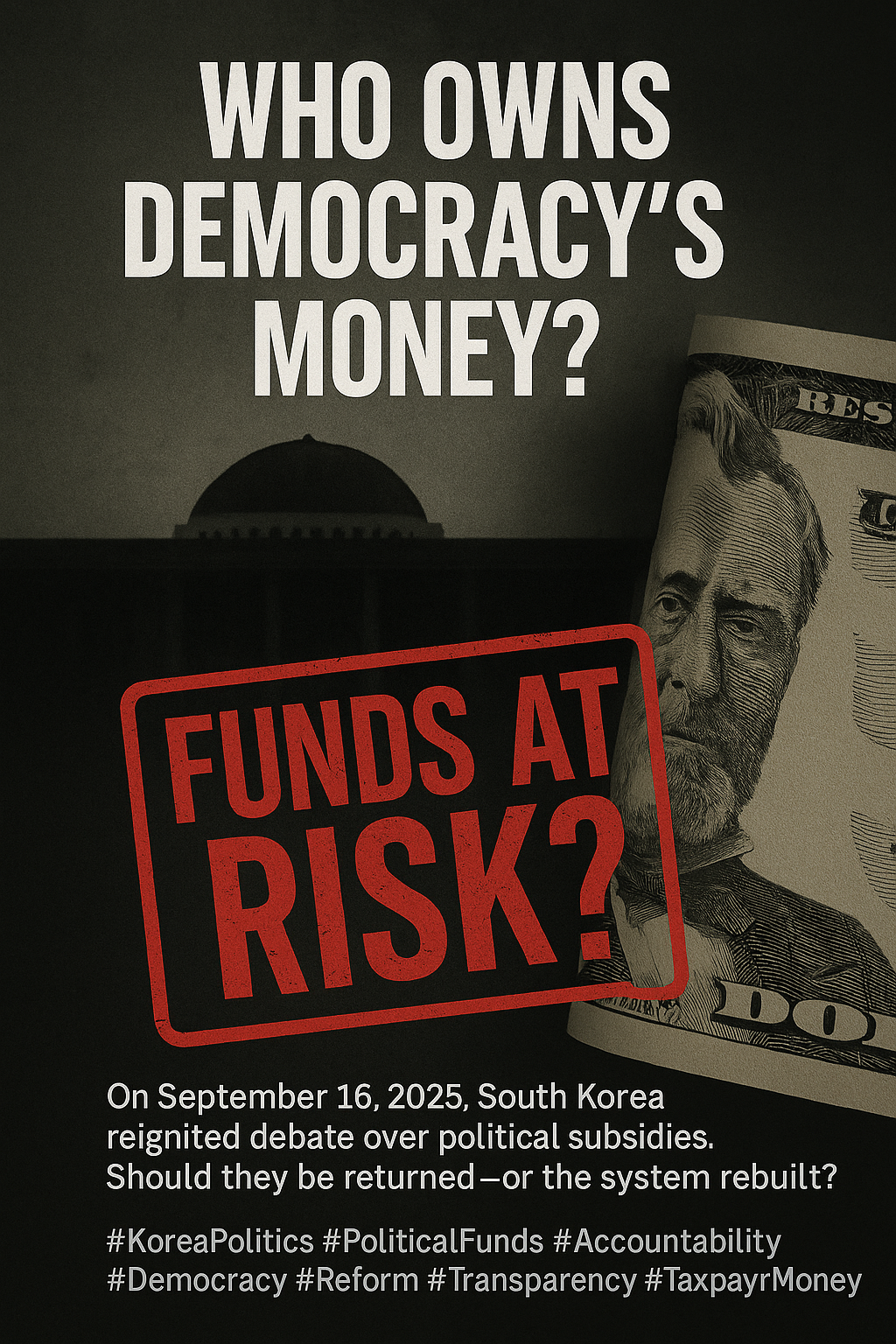
On September 16, 2025, one of the most pressing debates in South Korea’s political landscape reignited: the controversy over political subsidies and the demand for their recovery. These subsidies—public funds allocated to political parties to support democratic activity—are supposed to ensure that politics does not become the exclusive domain of the wealthy. Instead, they have become the focus of a fierce public discussion about loopholes, misuse, and the urgent need for reform.
The Origin of the Debate
South Korea’s political subsidy system was designed with noble intentions. Each year, the state allocates billions of won to parties based on their parliamentary seats and vote share. In theory, this system allows smaller parties to survive, helps prevent corruption by reducing dependence on private donations, and strengthens democracy.
But in practice, the system has revealed glaring weaknesses. Critics point to accounting loopholes and lax political fund oversight. Some parties, they argue, treat subsidies as little more than guaranteed income—used for purposes far removed from genuine democratic activity. The public, who funds these subsidies through taxes, often has little idea how the money is actually spent.
The Call for Recovery
On September 16, media reports highlighted growing calls for the recovery of subsidies from parties that misused them. The central question is simple: if taxpayer money is not being used transparently, should it be returned? Advocates of recovery argue that accountability demands not only penalties for abuse but also restitution. Without such measures, subsidies risk becoming subsidies for irresponsibility.
Yet opponents caution against framing the issue too narrowly. Merely demanding repayment may offer political theater without addressing deeper problems. They argue that unless the accounting rules and oversight mechanisms themselves are restructured, the same problems will simply recur. The debate, then, is not only about repayment but about systemic reform.
A Question of Integrity
At its core, this is not simply a financial debate—it is a moral one. Political subsidies are meant to safeguard democracy, not to serve as party slush funds. When citizens see subsidies misused, their trust in the political system erodes. Every misallocated won chips away at the belief that politics exists to serve the people.
South Koreans are particularly sensitive to these issues, given the nation’s history of corruption scandals. Each new controversy becomes part of a wider narrative: a tug-of-war between reform and regression, transparency and opacity, democracy and cynicism. The subsidy debate is merely the latest chapter in this ongoing struggle.
The Larger Implications
Why does this issue matter beyond accounting? Because it touches on the essence of representation. Democracy depends not just on elections but on sustained public trust. If taxpayers believe their contributions are being diverted into political convenience, the social contract weakens. The legitimacy of political institutions cannot survive without accountability.
Reform proposals include stricter auditing of political party accounts, greater transparency through real-time disclosure of expenses, and harsher penalties for misuse. Some even suggest restructuring the subsidy system entirely, tying funds directly to measurable democratic activities rather than to abstract party standing.
These ideas reflect a growing recognition: the problem is not just bad actors but a system that invites abuse.
Looking Ahead
As of September 16, 2025, the outcome of this debate remains uncertain. Will South Korea’s political leaders seize the moment to enact genuine reform, or will they settle for cosmetic measures that leave loopholes intact?
What is clear is that the issue has captured public attention. Citizens are increasingly vocal in demanding that their taxes support democracy, not dysfunction. The media has amplified these concerns, and legal experts warn that without change, the same controversies will resurface again and again.
Final Reflection
The subsidy debate is about more than money. It is about the integrity of South Korea’s democracy. Integrity, once compromised, is not easily restored. If subsidies are to serve their intended purpose, they must be handled with transparency, accountability, and respect for the public trust.
The question South Korea faces in September 2025 is both simple and profound: will political subsidies remain a tool of democratic health, or will they continue to be an Achilles’ heel of the system?
For the people who fund them, the answer matters deeply. For the politicians who spend them, the responsibility is heavier than ever
#KoreaPolitics #PoliticalFunds #Accountability #Democracy #Reform #Transparency #TaxpayerMoney #SouthKoreaNews
'korea news report > Economy' 카테고리의 다른 글
| Korea’s Chaebols Fight to Keep Their Thrones (0) | 2025.09.19 |
|---|---|
| Empty Shops, Full of Lies: The Rise of “Vacant Store” Investment Scams in Korea (0) | 2025.09.16 |
| Korea’s FTC Takes Aim at Platform Giants (0) | 2025.09.15 |
| From Seoul to Soksu-cho: How K-Culture is Driving Foreign Spending Across Korea (0) | 2025.09.11 |
| A Light in the Index – KOSPI’s Rise Echoes Economic Resolve (0) | 2025.09.10 |


